📝 How to add a project here (open in Sublime Text):
• When a project in
• Paste it at the top under the correct year divider (most recent first).
• Change
• Fill in the .outcome-box with key findings, and the .pub-box with the linked publication (if any).
• Hide this note before going live: add
• When a project in
dsd_research_active_projects.html is finished, copy its entire block between <!--PROJECT START--> and <!--PROJECT END-->.• Paste it at the top under the correct year divider (most recent first).
• Change
data-status="active" → data-status="completed", badge to status-completed, badge text to ✓ COMPLETED · [Year], progress to 100%.• Fill in the .outcome-box with key findings, and the .pub-box with the linked publication (if any).
• Hide this note before going live: add
display:none to .editor-note in the style block.
✓ 2023
 ✓ COMPLETED · 2023
2023
🌊 Coastal & Marine
✓ COMPLETED · 2023
2023
🌊 Coastal & Marine
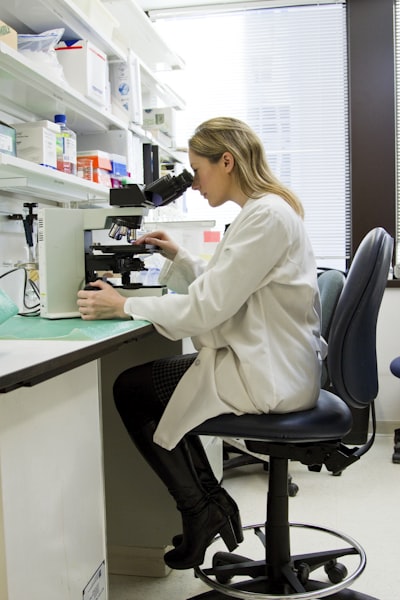
Microplastic sample analysis — laboratory phase, University of Chittagong
Microplastic Analysis in Coastal Sediments — Chittagong Coast
Full characterisation of microplastic contamination in intertidal and subtidal sediments at 12 sites along the Chittagong coast — including particle abundance, polymer typing via FTIR, colour and shape classification, and pollution index calculation. The study produced Bangladesh's first comprehensive coastal microplastic baseline dataset.
Project Completion100% ✓
Start Date
January 2022
Completion Date
September 2023
Duration
20 months
Study Area
12 sites — Chittagong intertidal zone
Samples Analysed
144 sediment samples
Funding Source
University of Chittagong Research Fund
🔑 Key Findings & Outcomes
Mean microplastic abundance of 842 ± 214 particles/kg dry weight — highest near port and fishing areas
Fibres dominated (62%), followed by fragments (24%) and films (14%) — polyethylene and polypropylene most common polymers
Pollution Load Index classified 8 of 12 sites as "heavily polluted" requiring immediate intervention
Produced the first georeferenced microplastic baseline dataset for the Chittagong coast
Linked Publication
Spatial Distribution of Microplastics in the Coastal Sediments of the Bay of Bengal, Bangladesh
Marine Pollution Bulletin · Vol. 185 · 2023
View Publication →
📸 Project Photos


 ✓ COMPLETED · 2023
2023
🗺️ Marine Spatial Planning
✓ COMPLETED · 2023
2023
🗺️ Marine Spatial Planning
GIS-based spatial planning framework — Bangladesh Exclusive Economic Zone
Marine Spatial Planning Framework for the Bangladesh Exclusive Economic Zone
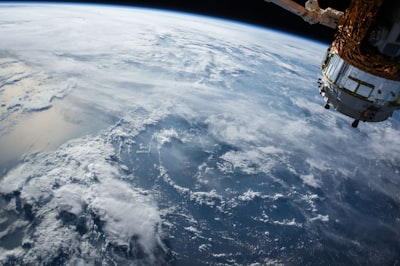
Development of a comprehensive GIS-based spatial planning framework for Bangladesh's EEZ — integrating fisheries data, shipping routes, biodiversity hotspots, conservation zones, and energy potential areas to support evidence-based blue economy policy development.
Project Completion100% ✓
Start Date
July 2022
Completion Date
December 2023
Duration
18 months
Study Area
Bangladesh EEZ — 200 nautical miles
Data Layers
18 spatial data layers integrated
Funding Source
Bangladesh Maritime University + DSD Fund
🔑 Key Findings & Outcomes
Produced a 1:500,000 scale GIS-based MSP framework covering the full Bangladesh EEZ
Identified 6 conservation priority zones, 4 offshore wind energy potential sites, and key shipping conflict areas
Framework submitted to Bangladesh DoF and MOFL as a policy reference document
Contributed to Bangladesh's Blue Economy Action Plan 2024 consultation process
Linked Publication
A GIS-Based Marine Spatial Planning Framework for the Bay of Bengal EEZ
Ocean & Coastal Management · Vol. 244 · 2023
View Publication →
📸 Maps & Project Photos

✓ 2022
 ✓ COMPLETED · 2022
2022
🌊 Oceanography
✓ COMPLETED · 2022
2022
🌊 Oceanography
CTD cast deployment — northern Bay of Bengal field expedition
Dissolved Oxygen & Nutrient Dynamics in the Bay of Bengal Oxygen Minimum Zone
Field investigation of dissolved oxygen profiles, nutrient cycling, and biological indicators within the northern Bay of Bengal's oxygen minimum zone — conducted during four seasonal cruises and contributing to regional climate and biogeochemical modelling datasets.
Project Completion100% ✓
Start Date
January 2021
Completion Date
November 2022
Duration
22 months · 4 seasonal cruises
Study Area
Northern Bay of Bengal — open ocean transects
Samples Collected
320 water samples across 40 stations
Funding Source
Shanghai Ocean University International Fund
🔑 Key Findings & Outcomes
Mapped the vertical extent of the OMZ (DO <2 mg/L) between 150–800m depth across 40 stations
Identified strong seasonal nitrogen cycling driven by monsoon-driven upwelling events
Dataset contributed to IPCC AR6 regional ocean biogeochemistry assessment
Published in Deep-Sea Research Part I — cited 12 times within 18 months of publication
Linked Publication
Dissolved Oxygen and Nutrient Dynamics in the Northern Bay of Bengal Oxygen Minimum Zone
Deep-Sea Research Part I · Vol. 185 · 2022
View Publication →
📸 Field & Lab Photos

 ✓ COMPLETED · 2022
2022
🗺️ GIS & Remote Sensing
✓ COMPLETED · 2022
2022
🗺️ GIS & Remote Sensing
Multi-temporal land cover classification — Landsat imagery analysis
Multi-Temporal Land Use Land Cover Change Analysis — Coastal Bangladesh (2000–2020)
Satellite-based assessment of land use and land cover dynamics across coastal Bangladesh over a 20-year period using Landsat imagery — quantifying mangrove loss, shrimp aquaculture expansion, and urban growth with accuracy assessment and transition probability analysis.
Project Completion100% ✓
Start Date
March 2021
Completion Date
August 2022
Duration
17 months
Study Area
Khulna–Satkhira coastal belt, Sundarbans buffer
Imagery Used
Landsat 5, 7, 8 — 3 time periods
Funding Source
Joint DSD–Shanghai Ocean University Fund
🔑 Key Findings & Outcomes
Mangrove cover declined by 18.3% (2000–2020), with highest loss rates in Satkhira and Bagerhat districts
Shrimp aquaculture expanded by 41% — replacing mangrove and agricultural land
Overall map accuracy: 92.4% (Kappa: 0.89) — meeting international classification standards
Published in Remote Sensing Applications journal; results used by WWF Bangladesh for conservation planning
Linked Publication
Land Use Land Cover Change Analysis Using Multi-Temporal Landsat Data in Coastal Bangladesh
Remote Sensing Applications: Society and Environment · Vol. 28 · 2022
View Publication →
📸 Maps & Field Verification
 ✓ COMPLETED · 2022
2022
🐠 Aquatic Biology
✓ COMPLETED · 2022
2022
🐠 Aquatic Biology
Plankton species identification under microscope — laboratory analysis
Phytoplankton Community Structure and Its Relationship with Physicochemical Parameters in Estuarine Waters
Seasonal study of phytoplankton community composition, abundance, and diversity in the Karnaphuli and Meghna estuaries — investigating correlations with water temperature, salinity, dissolved oxygen, nutrients, and transparency across four sampling campaigns.
Project Completion100% ✓
Start Date
February 2021
Completion Date
June 2022
Duration
16 months · 4 seasonal surveys
Study Area
Karnaphuli Estuary + Meghna Estuary
Species Identified
87 phytoplankton taxa
Funding Source
Bangladesh Maritime University Research Fund
🔑 Key Findings & Outcomes
87 phytoplankton taxa identified — Bacillariophyceae dominated in all seasons (52–68% of assemblage)
Shannon-Wiener diversity index ranged 1.8–3.2 — lowest during monsoon due to salinity dilution
Significant positive correlation (r=0.76) between salinity and species richness
First comprehensive phytoplankton reference dataset for Karnaphuli Estuary
Linked Publication
Phytoplankton Community Structure and Its Relationship with Physicochemical Parameters in Estuarine Waters
Journal of the Marine Biological Association of the UK · Vol. 102 · 2022
View Publication →
📸 Field & Lab Photos

✓ 2021 & Earlier
 ✓ COMPLETED · 2021
2021
🌾 Soil & Agriculture
✓ COMPLETED · 2021
2021
🌾 Soil & Agriculture
Composite soil sampling at agricultural sites — Gazipur district
Heavy Metal Contamination of Agricultural Soils Adjacent to Industrial Areas in Bangladesh
Multi-site soil contamination assessment measuring lead, cadmium, arsenic, and chromium concentrations in agricultural land adjacent to Dhaka and Chittagong industrial zones — calculating ecological risk indices and assessing food safety implications for locally grown crops.
Project Completion100% ✓
Start Date
January 2020
Completion Date
October 2021
Duration
21 months
Study Area
Gazipur, Narayanganj, Chittagong EPZ
Samples Analysed
180 soil samples from 30 sites
Funding Source
Bangladesh Agricultural University Research Grant
🔑 Key Findings & Outcomes
Cadmium and Lead exceeded WHO soil quality guidelines at 73% and 61% of sampling sites respectively
High ecological risk classification at 18 of 30 sites — Narayanganj showing highest contamination load
Findings submitted to Bangladesh Department of Environment as evidence for industrial buffer zone policy
Published in Environmental Science and Pollution Research — featured in national media coverage
Linked Publication
Heavy Metal Contamination of Agricultural Soils Adjacent to Industrial Areas in Bangladesh
Environmental Science and Pollution Research · Vol. 29 · 2022
View Publication →
📸 Field & Lab Photos


✅
No completed projects in this area yet
Try a different filter or check our active projects.
Inspired by Our Work?
Let's Collaborate.
All DSD research projects are open to collaboration proposals from universities, NGOs, and international research partners. Reach out with your ideas.